



IoT Monitoring Systems in Australia
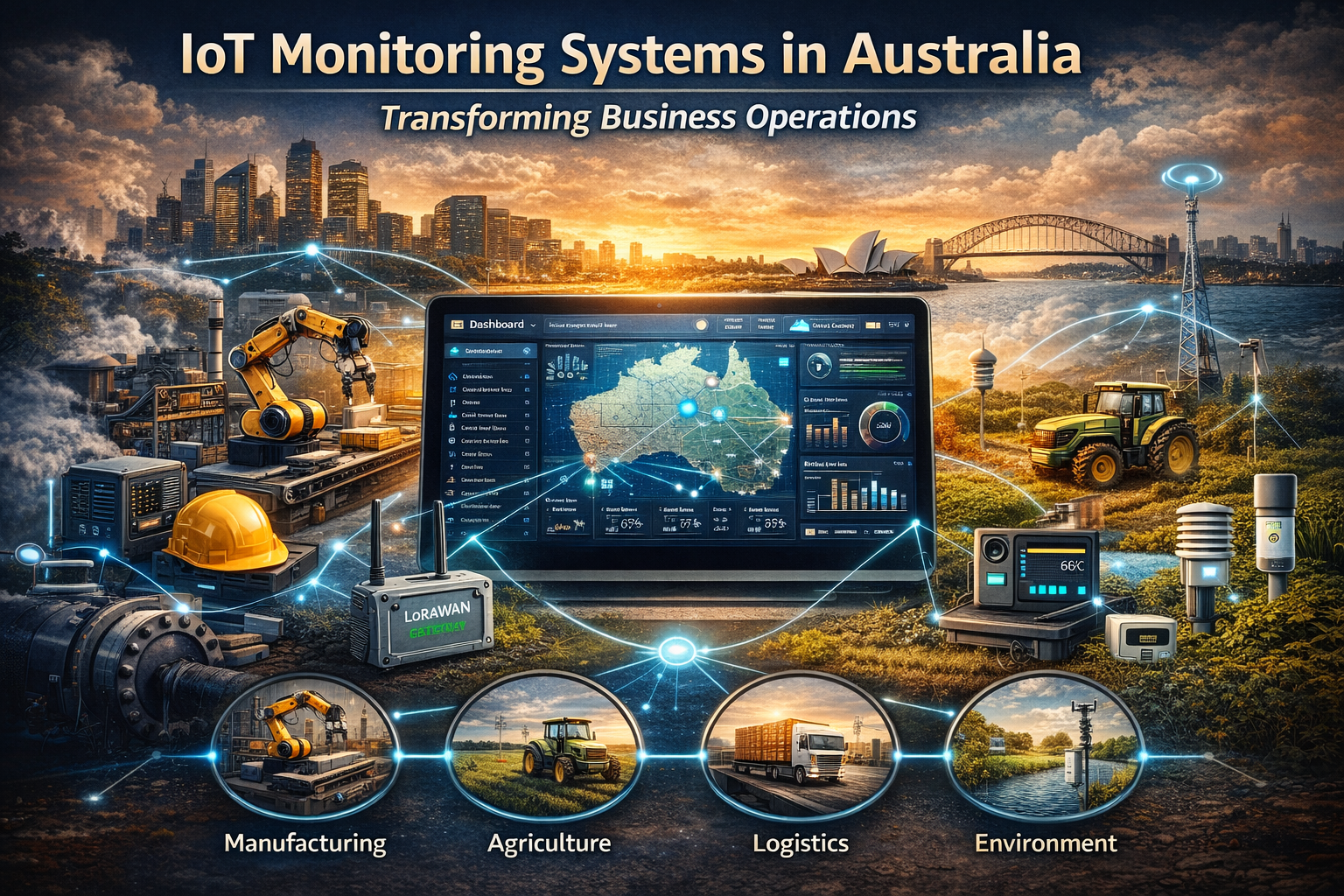
Across Australia, businesses are increasingly turning to IoT monitoring systems to improve operational efficiency, reduce costs, and gain real-time visibility into their operations. From manufacturing plants and logistics companies to agriculture and infrastructure management, IoT technologies are transforming the way organisations monitor assets, equipment, and environmental conditions.
An IoT monitoring system uses connected sensors and devices to collect data from physical environments. This data is transmitted to cloud platforms or dashboards where it can be analysed, visualised, and used to automate processes or trigger alerts.
As industries continue to adopt digital technologies, IoT monitoring has become one of the key drivers behind automation, predictive maintenance, and smarter business decision-making.
What is an IoT Monitoring System?
An IoT monitoring system is a network of connected sensors and devices that continuously collect and transmit data from physical assets or environments.
These systems typically consist of several key components:
Sensors
Sensors collect data such as temperature, humidity, vibration, pressure, motion, or location.
Connectivity Networks
IoT devices use networks such as LPWAN, cellular networks, Wi-Fi, or LoRaWAN to transmit data.
Gateways
Gateways aggregate sensor data and transmit it to cloud platforms or monitoring software.
Cloud Platforms
Data collected from devices is processed and stored in cloud systems where it can be analysed.
Monitoring Dashboards
Businesses can view real-time information through dashboards and receive alerts when specific conditions occur.
For example, a manufacturing company may use IoT sensors to monitor machine vibration and temperature. If abnormal readings occur, the system can automatically send an alert so maintenance teams can respond before equipment fails.
Why IoT Monitoring Systems Are Growing in Australia
Australia’s industries face unique operational challenges due to the country’s large geographic distances, remote infrastructure, and environmental conditions. IoT monitoring systems provide a powerful solution for overcoming these challenges by enabling remote monitoring and automation.
Several factors are driving IoT adoption across Australian industries.
Remote Operations
Many businesses operate in remote locations, including mines, farms, energy facilities, and infrastructure sites. IoT monitoring allows companies to track equipment and environmental conditions without needing staff on site.
Operational Efficiency
IoT systems provide continuous real-time data, helping organisations identify inefficiencies, reduce downtime, and optimise performance.
Cost Reduction
Predictive maintenance enabled by IoT sensors can significantly reduce repair costs by identifying issues before they escalate into major equipment failures.
Regulatory Compliance
Industries such as food logistics, pharmaceuticals, and energy must meet strict regulatory standards. IoT monitoring systems help companies track environmental conditions and maintain compliance with industry regulations.
Key Applications of IoT Monitoring Systems in Australia
IoT monitoring solutions are used across a wide range of sectors in Australia.
Manufacturing and Industrial Facilities
Manufacturers rely on IoT sensors to monitor production equipment and maintain operational efficiency.
Common applications include:
• Machine health monitoring
• Predictive maintenance
• Energy consumption tracking
• Production performance monitoring
• Equipment utilisation analysis
These systems help manufacturers reduce downtime and improve productivity by identifying potential issues before they cause disruptions.
Logistics and Supply Chain Monitoring
Australia’s logistics sector benefits significantly from IoT monitoring technologies.
IoT sensors allow companies to track:
• Shipment locations
• Temperature conditions
• Humidity levels
• Vehicle performance
• Asset movement
Cold-chain logistics companies, for example, use IoT monitoring systems to ensure that perishable goods remain within safe temperature ranges during transportation.
Agriculture and Smart Farming
Australia’s agricultural industry has rapidly adopted IoT technologies to improve farm productivity.
IoT monitoring systems can track:
• Soil moisture levels
• Weather conditions
• Crop health
• Livestock location
• Irrigation systems
Smart irrigation systems powered by IoT sensors allow farmers to optimise water usage, improving crop yields while reducing resource waste.
Energy and Utilities
Energy companies use IoT monitoring to manage infrastructure such as power grids, pipelines, and renewable energy systems.
Applications include:
• Power grid monitoring
• Renewable energy performance tracking
• Pipeline leak detection
• Infrastructure condition monitoring
These systems help energy providers improve reliability and reduce operational risks.
Environmental Monitoring
IoT technologies are increasingly used for environmental monitoring across Australia.
Sensors can monitor factors such as:
• Air quality
• Water quality
• Temperature changes
• Pollution levels
• Wildlife movement
Environmental monitoring systems help organisations track ecological conditions and respond quickly to environmental risks.
Benefits of IoT Monitoring Systems for Businesses
Implementing an IoT monitoring system can provide significant advantages for businesses.
Real-Time Visibility
IoT systems provide continuous monitoring, allowing organisations to access real-time data from their assets and operations.
Predictive Maintenance
Sensors can detect early warning signs of equipment failure, allowing businesses to perform maintenance before breakdowns occur.
Improved Efficiency
Operational data helps businesses identify inefficiencies and optimise processes.
Reduced Operational Costs
By preventing equipment failures and improving resource utilisation, IoT systems can significantly reduce operational costs.
Improved Safety
IoT monitoring can detect hazardous conditions, helping organisations protect workers and equipment.
Key Technologies Behind IoT Monitoring Systems
Several technologies power modern IoT monitoring solutions.
IoT Sensors
Sensors collect environmental and operational data. These devices are designed to operate in a wide range of conditions and environments.
Edge Computing
Edge computing allows data to be processed closer to where it is generated, reducing latency and improving response times.
Cloud Platforms
Cloud systems store and analyse large volumes of IoT data, enabling advanced analytics and machine learning.
Artificial Intelligence
AI can analyse sensor data to identify patterns, detect anomalies, and predict future issues.
Challenges of Implementing IoT Monitoring Systems
While IoT monitoring systems offer significant benefits, organisations must also consider several challenges.
Data Security
IoT systems involve large numbers of connected devices, which can create cybersecurity risks if not properly secured.
Integration with Existing Systems
Businesses often need to integrate IoT platforms with existing IT systems, which can require technical expertise.
Connectivity in Remote Areas
Although connectivity technologies such as LPWAN and satellite communication are improving, remote areas may still present connectivity challenges.
Initial Investment
Implementing IoT infrastructure can require significant upfront investment, although the long-term benefits often outweigh these costs.
The Future of IoT Monitoring in Australia
IoT adoption is expected to grow rapidly across Australia as industries continue to embrace digital transformation.
Several emerging technologies will accelerate this growth:
• 5G connectivity, enabling faster and more reliable data transmission
• AI-powered analytics, improving predictive insights
• Edge computing, enabling faster processing of IoT data
• Smart infrastructure, supporting connected cities and industrial systems
As these technologies evolve, IoT monitoring systems will become even more powerful and accessible to businesses of all sizes.
Final Thoughts
IoT monitoring systems are becoming an essential tool for modern businesses across Australia. By connecting sensors, devices, and analytics platforms, organisations can gain real-time insights into their operations and make smarter decisions.
From industrial monitoring and logistics tracking to agriculture and environmental management, IoT technologies are enabling businesses to operate more efficiently, reduce costs, and improve safety.
As digital transformation continues to reshape industries, IoT monitoring systems will play a critical role in helping Australian organisations stay competitive in an increasingly connected world.