



Real-Time IoT Event Streams: Building Smarter Anomaly Detection Systems
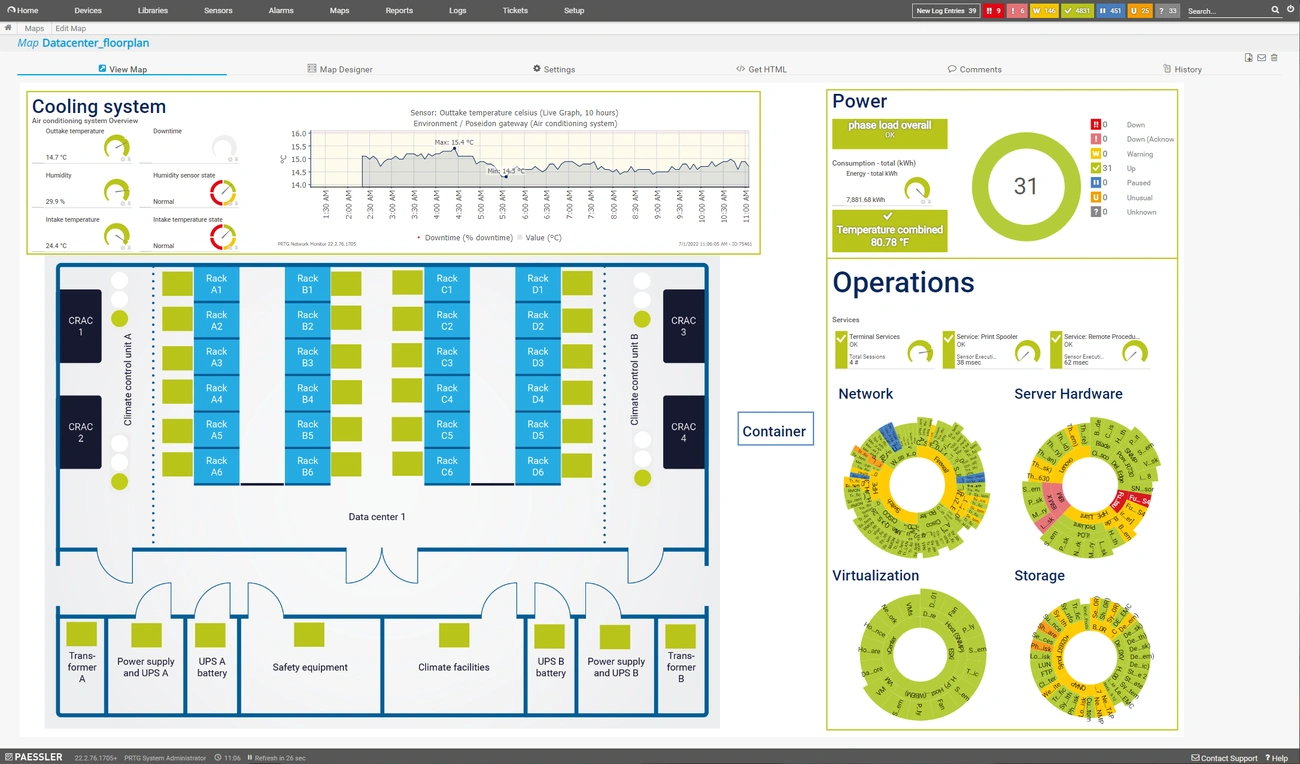
Up-to-the-minute IoT event stream monitoring plays a vital role in maintaining operational excellence within connected environments. The growing number of IoT devices and their deeper applications make detecting unusual patterns a priority for quick decision-making. Sensor failures, network attacks, or manufacturing defects can trigger these anomalous behaviors in systems.
Organizations can revolutionize their response to potential issues through effective IoT event analysis. Anomaly detection algorithms serve as core components of maintenance monitoring platforms, given the diverse IoT devices operating in different environments. Payment networks must identify and block suspicious transactions before processing them. These systems catch problems while data moves through the network and trigger immediate investigation processes, rather than waiting for end-of-day batch processing.
This piece delves into the characteristics of up-to-the-minute IoT event streams and tackles the challenges in anomaly detection. We’ll explore the architectural components that build smarter detection systems. The discussion also covers training strategies and reviews performance across ground datasets to help you create more responsive and reliable IoT monitoring solutions.
Characteristics of Real-Time IoT Event Streams
IoT environments generate massive amounts of streaming data with unique processing challenges. By 2025, connected IoT devices will reach 41.6 billion and generate 79.4 zettabytes (ZB) of data. This explosion of data needs sophisticated ways to handle and analyze information.
High-frequency data generation from edge devices
Edge systems produce continuous streams of telemetry, metrics, and events that need immediate processing. These data streams are not just huge—they’re noisy, unpredictable, and need up-to-the-minute analysis. Tesla’s systems process trillions of events daily from every business segment. This shows how modern IoT implementations work at massive scale.
Edge databases help manage this data flood through several key functions:
- Pre-aggregating and filtering raw data
- Compressing information to send efficiently
- Applying business logic at the source
- Sending only meaningful data upstream
This strategy tackles a basic IoT challenge: raw sensor streams are noisy, huge, and too expensive to transport completely. Edge processing also cuts down latency from seconds to milliseconds. This enables time-sensitive operations without needing cloud connectivity.
Spatio-temporal dependencies in sensor networks
IoT data shows two basic traits: temporal features (time-based patterns from individual sensors) and spatial features (connections between spread-out devices). Values from sensor networks create complex spatio-temporal streams that associate across both time and space.
Spatial relationships often show up as non-Euclidean dependencies. Network layout, rather than physical distance, determines how devices associate. To name just one example, IoT devices across mountains or forests might form spatial networks. Missing values from one sensor can be filled using its past data and current readings from spatially connected devices.
Many modern applications make use of these connections. Route planning systems need algorithms that think over how traffic patterns connect in both space and time, not just distance. In fact, spatial graph attention structures can find links between different locations and time periods to map the best routes.
Concept drift and evolving data patterns
IoT event streams are non-stationary—data’s statistical properties change over time. This change, called concept drift, poses big challenges. With 18.4 billion IoT sensors connected by 2018 creating over 2.5 quintillion bytes of data daily, handling this dynamic behavior becomes vital.
Researchers group concept drift into four main types:
- Sudden drift: Distribution changes faster over a short time
- Gradual drift: Changes happen slowly as new concepts replace old ones
- Incremental drift: Old concepts transform gradually with many middle stages
- Recurring drift: Old patterns show up again periodically
Concept drift reduces model performance, system strength, and decision-making efficiency while raising operational costs. Systems need proper detection and adaptation mechanisms. Without these, trained anomaly detection models don’t adapt to changed distributions and create many false positive events.
These challenges need sophisticated frameworks to detect, interpret, and adapt to concept drift in any robust IoT analytics system. Such frameworks enable quick, reliable decisions and stable services as environments keep changing.
Challenges in Anomaly Detection for IoT Streams
IoT event streams pose unique technical challenges that make traditional detection methods less effective. The practical deployment of these systems faces several obstacles in production environments, despite recent advances in this field.
Lack of labelled data in real-time environments
The biggest problem in IoT anomaly detection is the lack of labeled data, especially for rare fault conditions. IoT environments rarely have enough labeled data to train models properly. This becomes a major challenge when systems use multiple sensors because collecting detailed samples for uncommon faults is difficult.
These issues become worse because of:
- Professional annotation costs too much
- Complex systems have unpredictable anomalies
- Attack patterns keep changing, making old labels useless
On top of that, many methods need large datasets with both normal and malicious traffic. These datasets are hard to build and take lots of resources to process. IoT system anomalies don’t happen often, which creates a major imbalance. One dataset showed normal traffic made up 99% of cases, while anomalies were just 1%.
Handling multivariate and high-dimensional signals
IoT data comes with multiple variables, high dimensions, and complex patterns that make spotting anomalies tough. These data streams create complex networks where values relate to each other across time and space.
Problems with many dimensions need analysis of multiple variables. Finding the normal probability distribution becomes nearly impossible, especially with different types of data dimensions. This gets more complex with:
- More connected sensors
- Different ways measurements relate to each other
- Time dependencies at various scales
The data shows strong connections across space and time that basic unsupervised learning methods can’t handle well. Too many dimensions make these problems worse, leading to models that either overfit or create too many false alarms.
False positives due to noisy sensor inputs
Noisy sensor inputs create too many false alerts in IoT anomaly detection systems. Current solutions don’t deal very well with class imbalance and noisy data, which limits their real-world use.
Noisy and incomplete data in IoT environments comes from:
- Broken sensors and manufacturing defects
- Data transmission problems
- Environmental damage to sensor readings
- Network attacks that delay or lose packets
These issues make data less reliable and trustworthy, which leads to more false alarms. Research shows deep learning models work like black boxes, making it hard to understand why they make certain decisions when dealing with noisy inputs.
Too many false positives tire out security analysts and waste resources. Teams spend time checking non-issues while real threats slip by, and people lose faith in the system. Some approaches try to make models stronger by adding noise during training, but nobody has looked closely at the trade-offs.
The task becomes even harder because the line between normal and unusual behavior depends heavily on specific application knowledge. Without this knowledge, unsupervised models have trouble setting the right detection limits, especially for gradual changes and deformation-related problems.
Architectural Components of a Smart Detection System
Smart anomaly detection systems need reliable architectural components to handle IoT event streams as they change. These components work together to tackle high-frequency data generation, complex dependencies, and noisy signals.
Sliding window segmentation for stream processing
Sliding windows are the foundations of IoT stream processing. They create manageable chunks from continuous, endless data flows. This technique processes and adds up data over specific timeframes that move forward step by step. The result is up-to-the-minute analysis of changing patterns.
Two things define a sliding window: the window size and how often it slides forward. Take temperature sensors as an example. A 10-minute window that moves every minute keeps calculating averages and updates results with new data.
This method works great for IoT applications by:
- Limiting calculations to specific moving parts of the data stream
- Watching patterns develop over time
- Quickly responding to critical events in IoT systems
All the same, sliding windows need careful resource management. They just need lots of computing power to adjust with each new event.
Dual graph attention for temporal and feature correlation
Dual graph attention networks capture both time dependencies and feature correlations to model complex IoT data relationships. This approach gives different weights to key features while it models multi-dimensional sensor data.
The system combines gated recurrent units (GRU) with multi-head self-attention mechanisms. This structure helps explore connections between different time periods and understand relationships between various sensor readings.
Multi-scale wavelet decomposition for noise reduction
Noisy sensor inputs are the biggest problem for anomaly detection systems. Multi-scale wavelet decomposition breaks down input signals into different frequency bands to solve this.
The process uses Discrete Wavelet Transform (DWT) over and over to break each channel into multiple resolution levels. DWT filtering involves mixing with scaling and wavelet functions at each level. The system then gets wavelet coefficients that show traffic patterns at different time resolutions.
This approach brings several benefits:
- Catches patterns at different levels in the data
- Cuts down on noise
- Spots useful information across different time scales
- Makes structural features clearer at broader scales while sharpening details at finer ones
These three architectural components together create a reliable foundation for smart detection systems. They process IoT event streams well and keep false positives low.
Model Training and Adaptation Strategies
IoT event streams need sophisticated training strategies that can adapt to changing data patterns without much supervision. These strategies must balance learning efficiency with the computational limits of distributed sensor networks.
Meta-learning with MAML for few-shot adaptation
Model-Agnostic Meta-Learning (MAML) has become a powerful tool for IoT anomaly detection. MAML helps models quickly adapt to new tasks when data is limited. Traditional deep learning works differently – MAML wants to find the best original parameters that we can fine-tune faster for detection scenarios of all types. Each N-way K-shot problem becomes a separate task. “N-way” means the number of classes while “K-shot” shows available samples per class.
The standard MAML setup faces two big problems. Task conflicts and bias toward existing tasks create issues. When shared original parameters are forced across different tasks, the model’s ability to adapt decreases. We see this through changes in the network’s original loss. Most trained network parameters also develop biases toward existing tasks, which hurts how well they work with new IoT events.
Joint optimisation of prediction and reconstruction loss
Recent advances pair reconstruction error with contrastive learning to build more resilient detection systems. This method trains autoencoders to reconstruct feature sequences accurately without overfitting to normal network traffic. Models learn better latent space representations by adding a triplet margin loss next to traditional reconstruction goals. These representations can separate normal variations from truly anomalous events.
This combined optimization approach helps detect subtle changes in normal data distributions. The result is fewer false positives that often plague IoT anomaly detection systems.
Online learning to handle concept drift
IoT event streams keep evolving. Detection systems must adapt to concept drift – when statistical properties of data change over time. New adaptive frameworks like OASIS (Online Adaptive Ensembles for Drift Adaptation on Evolving IoT Data Streams) use ensemble approaches to detect drift.
These frameworks work in two steps. First comes initial preprocessing with feature selection techniques. Then adaptive training kicks in to adjust for concept drift. Tests on public IoT datasets show that adaptive ensemble approaches improve concept drift detection by a lot. They also identify anomalies in imbalanced data streams effectively.
These training strategies help IoT anomaly detection systems maintain their performance as device behaviors, network conditions, and threat landscapes continue to change.
Evaluation on Real-World IoT Datasets
IoT event stream anomaly detection architectures prove their worth through extensive testing on multiple standard datasets. The results give an explanation of how these models perform in a variety of industrial settings.
Server Machine Dataset (SMD) anomaly detection
The Server Machine Dataset includes data collected over 5 weeks with 1-minute sampling intervals from 28 servers. Each server tracks 33 metrics. The dataset has an anomaly rate of only 4.21%, which matches real-life deployments. Tests show hybrid architectures perform better than traditional methods. XGBoost-SVM configurations achieve exceptional results with balanced precision (93.5%) and recall (94.8%).
SWaT and SMAP benchmark comparisons
Singapore University of Technology and Design developed the Secure Water Treatment (SWaT) dataset. It contains industrial control system telemetry from a water treatment testbed with 51 channels and a 12.14% anomaly rate. The dataset spans 11 days of continuous operation and includes 36 attack scenarios. Tests on the SMAP (Soil Moisture Active Passive satellite) and MSL (Mars Science Laboratory rover) datasets verify model performance in a variety of domains. Meta-MWDG models showed better results than other state-of-the-art methods.
Ablation studies and parameter sensitivity analysis
Power consumption and motion detection emerged as the most important predictors in parameter sensitivity analysis. Removing these features led to 6.2% and 4.8% F1-score reductions. Ensemble models managed to keep reliable performance with varying production conditions (95.8–97.1% accuracy), work patterns (93.3–94.7% F1-score), and seasonal changes (93.9–95.4% recall). Ablation studies highlighted each model component’s effectiveness. Statistical validation through ANOVA (p < 0.05) and Tukey’s HSD tests confirmed the most important performance differences.
Conclusion
Real-time anomaly detection for IoT event streams is a vital component of modern connected environments. This article explores how these systems handle massive data flows from billions of connected devices and tackle complex challenges in IoT environments.
The unique traits of IoT data need specialized approaches that go beyond traditional detection methods. High-frequency generation, spatio-temporal dependencies, and concept drift create a need for architectures that can handle evolving data patterns while staying accurate.
False positives are the biggest problem in ground implementations. Noisy sensor inputs and high-dimensional signals create environments where telling real anomalies from normal variations becomes extremely difficult. State-of-the-art solutions like sliding window segmentation, dual graph attention networks, and multi-scale wavelet decomposition help address these challenges.
Training strategies are vital to make these systems work. Model-Agnostic Meta-Learning lets systems quickly adapt to new anomaly types. Joint optimization approaches balance prediction accuracy with reconstruction capabilities. The systems also adapt to concept drift through online learning mechanisms that maintain performance as data patterns change.
Tests on datasets like SMD, SWaT, and SMAP show how well these approaches work in real life. Hybrid architectures perform better than traditional methods, especially when you have severe class imbalance typical in ground deployments.
IoT anomaly detection systems must become more autonomous and self-adaptive as deployments grow. Finding the right balance between detection sensitivity and false alarms will remain the main goal for practical implementations. Research into noise reduction and adaptive thresholding are the foundations of future developments in this field.
Smart anomaly detection systems are a great way to get operational excellence across connected environments. Knowing how to spot potential issues before they cause major disruption makes them essential parts of any solid IoT strategy.
FAQs
Q1. What are the main challenges in detecting anomalies in IoT event streams? The primary challenges include handling high-frequency data generation from edge devices, dealing with spatio-temporal dependencies in sensor networks, and adapting to concept drift and evolving data patterns. Additionally, the lack of labelled data, managing multivariate signals, and reducing false positives due to noisy sensor inputs pose significant hurdles.
Q2. How does sliding window segmentation help in processing IoT streams? Sliding window segmentation creates manageable chunks from continuous data flows, enabling real-time analysis of evolving patterns. It bounds computation to finite, moving segments of the data stream, supports continuous monitoring for pattern identification, and allows for immediate responses to critical events within IoT ecosystems.
Q3. What is the role of meta-learning in IoT anomaly detection? Meta-learning, particularly Model-Agnostic Meta-Learning (MAML), enables models to quickly adapt to new tasks with limited data. It aims to find optimal initial parameters that can be rapidly fine-tuned across various detection scenarios, making it particularly useful for IoT environments where new anomaly types may emerge.
Q4. How do smart detection systems handle noisy sensor inputs? Smart detection systems employ techniques like multi-scale wavelet decomposition to address noisy sensor inputs. This approach systematically breaks down input signals into distinct frequency bands, effectively capturing hierarchical patterns in the data, removing noise to a certain extent, and enabling the model to capture useful information at different time scales.
Q5. What are some key datasets used for evaluating IoT anomaly detection systems? Important datasets for evaluating IoT anomaly detection systems include the Server Machine Dataset (SMD), which encompasses a 5-week collection period from 28 servers, the Secure Water Treatment (SWaT) dataset offering industrial control system telemetry, and the SMAP (Soil Moisture Active Passive satellite) dataset. These datasets help validate model performance across diverse domains and real-world scenarios.