



How Smart Workplaces Actually Support Neurodiversity: IoT Solutions That Work
The global population includes about 15% of neurodivergent individuals – that’s roughly 1 in 7 people living with autism, ADHD, dyslexia, or other cognitive variations. Much of the workforce faces substantial challenges despite representing such a large segment of the population.
Teams that include neurodivergent professionals can achieve 30% higher productivity compared to others, according to Harvard Business Review research. Traditional work environments often create barriers through overstimulation, poor lighting, constant noise, and rigid workflows. The need for better support becomes clear when 64% of neurodivergent workers feel their organisations could do more to support people with neurodiverse conditions.
Let’s take a closer look at how effective neurodiversity workplace design extends beyond simple accommodations. We’ll explore specific IoT solutions that revolutionise workplace experiences for neurodivergent employees – from customizable environments to stress-reduction technologies. These technologies serve not just as assistive tools but can become mainstream solutions that benefit everyone in our increasingly connected workplaces.
Understanding Cognitive Inclusion in Smart Workplaces
Cognitive inclusion is a vital but often overlooked part of workplace accessibility. Organisations typically focus on physical adaptations. True inclusive environments need to accommodate different thinking styles and ways of processing information.
Defining cognitive inclusion in the context of IoT
Cognitive inclusion values different ways of thinking, learning, and solving problems in workplace environments. Physical accessibility deals with tangible barriers. Cognitive inclusion recognises the hidden diversity in people’s ways of understanding and interacting with information and their surroundings.
IoT brings new dimensions to cognitive inclusion. The Artificial Intelligence of Things (AIoT) combines IoT devices with intelligent services. These systems adapt to individual cognitive priorities. They reduce cognitive load by offering personal assistance. Users can focus on their main tasks instead of dealing with technical complexities.
A cognitively inclusive IoT design has these key elements:
- Simplified interfaces that reduce mental processing demands
- Customizable sensory inputs that match individual priorities
- Predictable, easy-to-use interaction patterns
- Features that work with different executive function levels like time management and memory
These design principles give neurodivergent users better control over their work environments without judgement.
Why neurodiversity workplace design needs to go beyond physical accessibility
Numbers tell a clear story – only 29% of autistic adults in the UK have found any kind of employment. Work environments don’t deal very well with diverse cognitive needs, not because of capability limits.
Neuro-inclusive design needs a complete strategy that exceeds physical accessibility. It emphasises equity, belonging, and real inclusion. Workplace design must consider both visible and hidden diversity to discover the full potential of every employee.
Forbes research shows cognitively diverse teams solve complex problems faster than similar groups. These teams use different thinking approaches when facing new challenges. They learn and perform better – whatever their gender, age or ethnicity.
Traditional workplace practises often miss the unique strengths of neurodivergent individuals. Innovative technology like AI-driven environmental adjustments, wearable devices, and sensory mapping can substantially improve workplace experiences for neurodivergent employees. These tools help interactions and increase comfort through individual-specific environments.
Flexibility plays a crucial role. Workspaces must adapt their layout and support various sensory, cognitive, and social needs. Organisations that provide choice and control through technology remove barriers for neurodivergent individuals.
IoT solutions serve two purposes in cognitive inclusion. They use cognitive computing to analyse information from various sources and increase human intelligence. They also create machine-generated responses that offer personal cognitive assistance. This human-machine teamwork builds environments where neurodivergent employees thrive without extra cognitive load.
Organisations must embrace cultural changes supported by consistent leadership commitment for true neuro-inclusion. Leaders should make diversity, inclusion, and fair workplace experiences their priorities. They need to understand that cognitive diversity improves wellbeing and performance throughout the organisation.
Key IoT Features That Support Neurodivergent Employees
The physical environment is a vital part of workplace performance. This affects everyone, but neurodivergent employees need it even more. Smart IoT technologies provide practical solutions that make neurodiversity workplace design work better through customization and automation.
Customizable lighting and sound for sensory regulation
The standard office environment can overwhelm and hurt neurodivergent people with sensory sensitivities. Smart lighting systems let users adjust brightness, colour temperature, and light distribution based on their comfort levels. These aren’t just priorities—they reduce sensory overload and visual strain.
Simple solutions like dimmable LED systems help neurodivergent employees control their surroundings. Teams can customise more advanced setups with colour-tunable lights based on specific needs. Many offices now use strategic acoustic design with sound masking, acoustic panels, and buffer zones that keep high-energy areas away from quiet zones.
One-tap controls for lighting, temperature, and background sound create “calm scenes” that help people with sensory processing sensitivities. These environments matter because about 45% of neurodivergent people leave or lose their jobs due to being misunderstood at work.
Routine management through smart reminders and voice assistants
Executive functioning challenges affect many neurodivergent people. These mental processes help us plan, focus, and complete tasks. IoT-connected calendars, alarms, and prompts guide users through daily routines and help with time management.
Voice assistants break down overwhelming tasks into smaller steps that make complex routines easier. This technology helps with transitions between activities—a tough part of the workday for neurodivergent employees.
Smart reminders deliver custom notifications about meetings, breaks, or task deadlines. This reduces cognitive load and frees up mental resources for important work. The technology promotes independence while providing needed structure.
Wearables for real-time stress and emotion tracking
Wearable technology provides trailblazing support for emotional regulation through physiological monitoring. These devices track:
- Heart rate variability and stress levels
- Sleep quality and movement patterns
- Changes in physiological signals that show emotional dysregulation
The Empatica E4 wristband measures electrodermal activity and heart rate to identify emotions like anger, happiness, pain, and sadness. This real-time feedback helps neurodivergent employees recognise and manage their emotional states before feeling overwhelmed.
Research shows autistic adults experience depression and anxiety more often than their peers. Wearable technology alerts users to sensory overload early, which lets them regulate themselves proactively.
Environmental control via mobile apps and automation
Integrated IoT systems offer complete environmental management through mobile applications. These systems gather real-time sensor data about light levels, ambient noise, and temperature changes and show this information in accessible formats.
After collecting sensory data, automated systems adjust environments based on individual settings. A neurodivergent employee’s saved preferences for lighting, temperature, and sound levels can automatically activate when they enter a meeting room.
These technologies don’t try to “fix” neurodivergent individuals. They give people independence and choice. Research shows technology should promote autonomy instead of trying to mask autism. The focus stays on adapting environments to individual needs rather than forcing people to fit standardised spaces.
Real-World Example: Cubbie Pod in Inclusive Workspaces
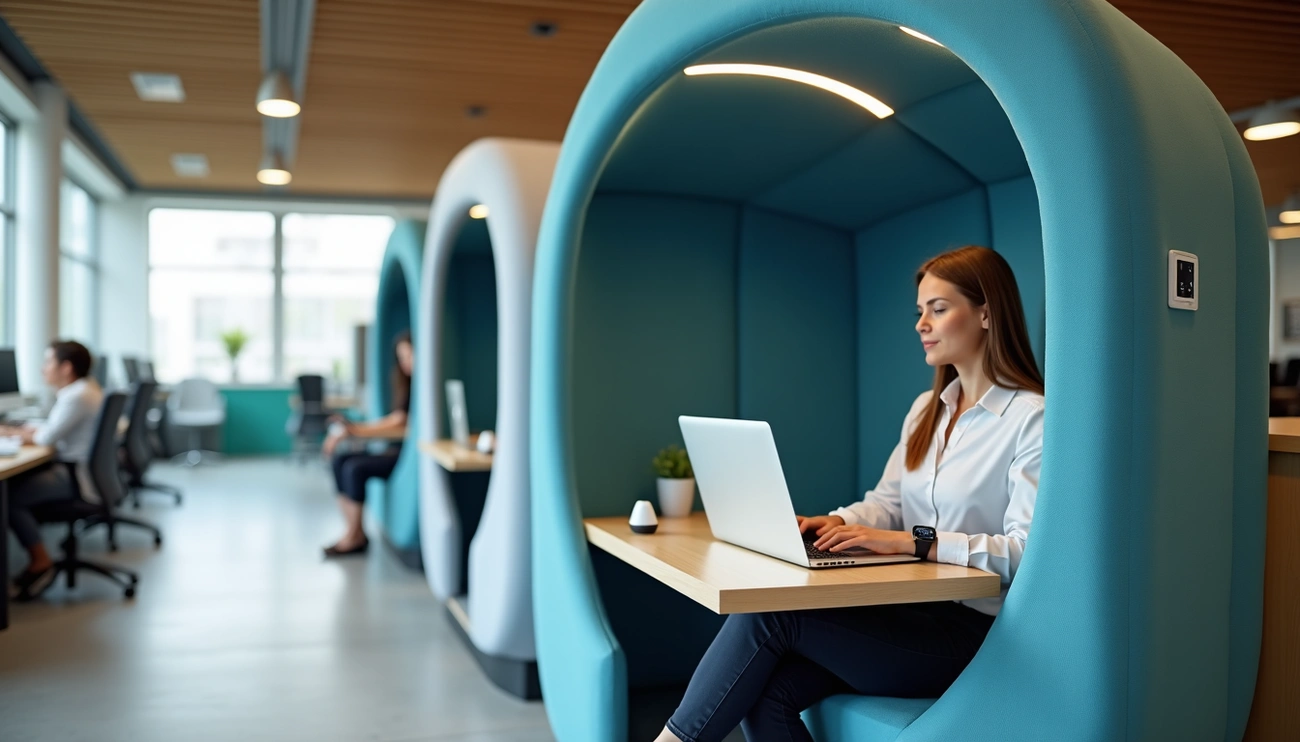
Cubbie, a compact sensory management pod, stands out as one of the most practical IoT tools supporting neurodiversity in the workplace. This self-contained booth measures 1.7m square by 2.3m high and fits naturally into many environments. People using wheelchairs and hoists can access it easily.
How Cubbie adapts to individual sensory profiles
Cubbie’s pod shows how workplaces can accommodate neurodiversity through its highly customizable sensory environment. Each pod comes with features you can adjust:
- Personalised lighting settings
- Customizable audio experiences
- Visual displays that match your priorities
The pod works without constant supervision from occupational therapists, which makes it self-sufficient. Its design puts both independence and safety first with transparent lock-free doors. Users stay visible while keeping their privacy. This balance lets neurodivergent employees manage their needs independently.
The system creates calming or energising spaces based on what users need at any moment. This flexibility is vital since sensory needs vary greatly among neurodivergent individuals and can change throughout the day.
Cloud-based personalization and cross-location access
A sophisticated cloud-based software system powers Cubbie’s success. This technology lets managers oversee the facility while making scheduling simple and efficient. The cloud infrastructure brings several unique benefits to neurodiversity workplace design:
The software creates individual-specific experiences based on each user’s unique sensory profile. Once registered, users can walk into any Cubbie pod, anywhere, and their personalised programme starts instantly. Organisations with multiple locations find this feature particularly valuable, as do people who move between different work environments.
Occupational therapists can look at collected data from anywhere to improve each user’s experience over time. This remote monitoring reduces the need for in-person visits while maintaining professional oversight.
Impact metrics: 80% stress reduction in under 15 minutes
Research proves Cubbie’s effectiveness as an IoT solution. Users can reduce their stress and anxiety by up to 80% in just 15 minutes. This quick relief lets them adjust their sensory experience and return to work with minimal interruption.
Studies in Irish educational settings revealed a 60% drop in disruptions and 90% more participation. The technology provides up to 30 custom sensory interventions daily, making it work well in busy environments.
The pods help anyone dealing with stress, anxiety, or sensory challenges, not just autistic and neurodivergent individuals. Schools report that “there is no stigma attached to its use,” which makes it a tool that brings the whole workplace community together.
Design Challenges in Building Inclusive IoT Systems
Creating inclusive IoT systems to support neurodiversity comes with technical and ethical challenges that need careful thought. These technologies are a great way to get benefits, but their development must tackle fundamental problems to help neurodivergent individuals.
Bias in training data and lack of neurodiverse datasets
AI algorithms that power IoT devices show human biases from their training data. Research reveals that AI word encoders link terms about neurodivergence with negative meanings:
- Sentences about autism or neurodiversity are seen more negatively than neutral statements
- The phrase “I have severe autism” gets three times more negative views than “I am a nonautistic person”
- Recruitment algorithms without neurodiverse training data philtre out neurodivergent candidates who don’t match neurotypical expectations
These biases affect how workplace IoT solutions work, and might strengthen barriers instead of removing them.
Over-dependence on automation and loss of autonomy
IoT systems want to support neurodivergent employees but they also risk creating over-reliance. Users could depend too much on technological help rather than build their own coping strategies. People might stop thinking critically when they trust automated decisions blindly.
Research shows that too much monitoring can lower productivity because employees focus on avoiding surveillance instead of doing their work. This creates a workplace where technology meant to help ends up causing more stress.
Privacy concerns in biometric and behavioural tracking
Wearable devices and environmental sensors gather sensitive data about neurodivergent employees’ emotional states, thinking patterns, and body responses. Many neurodivergent individuals share too much personal information online because they feel isolated or don’t understand what it all means.
Neurodivergent people face unique privacy risks and are 20% more likely to fall victim to financial scams. On top of that, consent forms use complex language that hides how personal data gets collected and used.
Affordability and accessibility of inclusive devices
Inclusive design must include accessible pricing and usability. Many IoT solutions cost too much or need technical knowledge that limits who can use them. This creates a gap where people who need neurodiversity workplace support the most can’t access it due to money or technical barriers.
The challenge also involves making these technologies adapt to different thinking styles instead of forcing users to follow standard patterns. This needs designs that stay flexible while keeping things simple.
From Assistive to Mainstream: The Future of Inclusive IoT
Technologies once thought of as purely “assistive” are becoming mainstream workplace features that benefit everyone. This transformation shows how user-focused design creates better products for all users.
How niche tools like sensory pods become universal
Quiet spaces like sensory pods started as specialty accommodations but now appear everywhere—from schools to offices, stadiums, and airports. These spaces create controlled sensory environments that reduce overstimulation and promote self-regulation. A niche solution typically grows into a benefit for everyone. Office pods now give each employee the freedom to choose—anyone feeling sensory overload can reset in a calm, predictable space.
The role of co-design with neurodivergent users
Neurodivergent users’ input from the start of the design process reveals critical insights that traditional methods miss. Research shows adapted interview techniques with visual aids and interactive sketching help neurodivergent participants share more deeply. Since 15-20% of the population is neurodivergent, co-design practises improve software acceptance within these communities. This approach values different thinking styles and recognises neurodivergent employees’ excellence in deep work, error detection, and innovative thinking.
Cross-sector collaboration for adaptable solutions
Truly inclusive IoT solutions emerge through partnerships between engineers, designers, educators, healthcare professionals, and neurodivergent individuals. Digital technologies help move away from “one size fits all” models. Many users abandon assistive technologies that don’t meet their specific needs. Effective solutions need cross-disciplinary expertise that addresses both technical capabilities and human experiences. Technology should adapt to individual circumstances rather than forcing users to adapt to it.
Conclusion
Smart workplace technologies represent a most important advancement that creates truly inclusive environments for neurodivergent employees. This piece explores how IoT solutions exceed simple accommodations to address the actual needs of the estimated 15% of the global population with diverse cognitive styles.
These benefits go beyond simple accessibility. Employees can regulate their sensory experiences with customizable lighting and sound systems that match individual needs. Smart reminders and voice assistants help manage executive function challenges without adding cognitive burden. Wearables offer immediate stress tracking, while environmental control systems provide unprecedented personalization through mobile apps.
Cubbie pods showcase how thoughtful design reduces stress by up to 80% in just 15 minutes. Their cloud-based personalization lets users access their settings in different locations, making consistent support available whatever the work location.
Many challenges lie ahead. AI training data’s bias, potential over-dependence on automation, privacy concerns, and affordability problems need careful attention as these technologies evolve. The main goal should strengthen users rather than create new dependencies.
The fundamental change from seeing these tools as merely “assistive” to understanding their universal benefits shows promise. Tools that work for neurodivergent employees improve everyone’s experience. This viewpoint, combined with co-design practises that include neurodivergent users from the start, shows what a world of workplace technology that adapts to people—not the other way around—could look like.
Teams with neurodivergent professionals show 30% more productivity, yet many organisations fail to create environments where cognitive diversity runs on success. IoT solutions implementation offers not just an accessibility requirement but a competitive edge. The technology exists—we need the steadfast dedication to use it well and inclusively.
FAQs
Q1. How can IoT technology support neurodivergent employees in the workplace? IoT solutions can provide customisable environments, including adjustable lighting and sound, smart reminders, wearables for stress tracking, and environmental control via mobile apps. These technologies help neurodivergent employees manage sensory input, routine tasks, and stress levels, creating a more comfortable and productive work environment.
Q2. What is a Cubbie pod and how does it benefit neurodivergent workers? A Cubbie pod is a compact, self-contained booth that offers a personalised sensory environment. It features adjustable lighting, audio experiences, and visual displays that adapt to individual preferences. Cubbie pods have been shown to reduce stress by up to 80% in just 15 minutes, providing a quick and effective way for neurodivergent employees to self-regulate.
Q3. Are there any challenges in implementing IoT solutions for neurodiversity support? Yes, there are several challenges, including potential bias in AI training data, risks of over-dependence on automation, privacy concerns related to data collection, and issues with affordability and accessibility of inclusive devices. Addressing these challenges is crucial for creating truly effective and ethical IoT solutions for neurodiversity support.
Q4. How does cognitive inclusion differ from physical accessibility in workplace design? Cognitive inclusion focuses on accommodating diverse thinking styles and information processing methods, going beyond physical adaptations. It involves creating environments and systems that support different ways of perceiving, understanding, and interacting with information and surroundings, which is particularly important for neurodivergent employees.
Q5. Can IoT solutions designed for neurodivergent employees benefit all workers? Absolutely. Many IoT solutions initially designed for neurodivergent individuals, such as customisable work environments and stress reduction technologies, can benefit all employees. This shift towards universal design creates better products and work environments for everyone, regardless of their neurological profile.